

12 Basic Economy Booking Mistakes (and how to fix each one)
Basic Economy Booking Mistakes can be a great deal…until it isn’t. These ultra-low fares strip out flexibility and perks to show the lowest possible price on search results. That’s fine if you know what you’re buying. Too many travelers click “cheapest” and only discover the real cost at the airport (or when their family is scattered across row 29).
Below are the most common mistakes people make when booking Basic Economy plus clear fixes so you can decide when to buy it, when to skip it, and how to fly it smart.
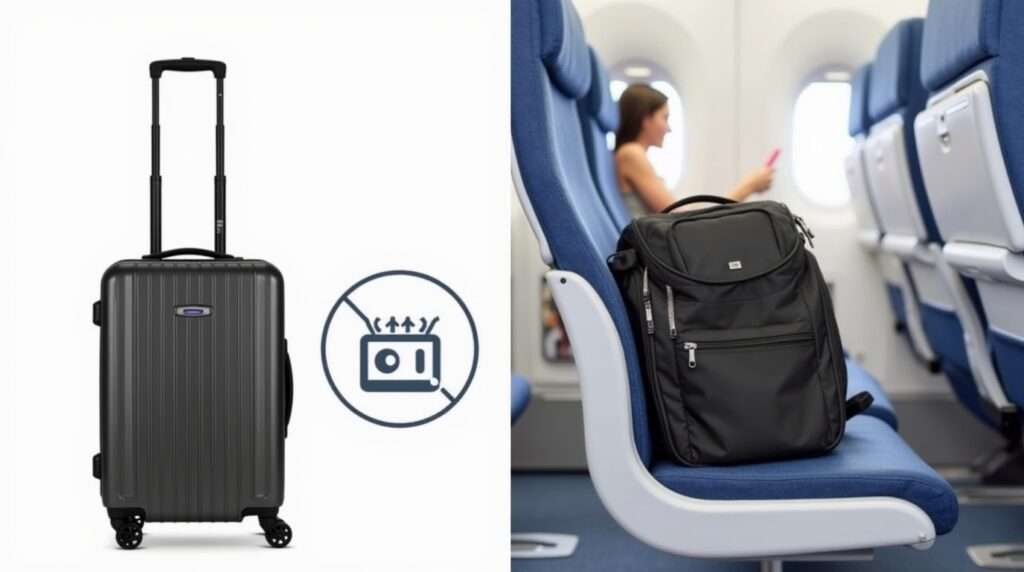
Table of Contents
ToggleQuick cheat sheet: When Basic Economy makes sense
Choose Basic Economy when:
You’re taking a short trip with only a personal item (fits under the seat).
You’re solo (or flexible about sitting apart).
Your plans are set; you won’t need to change the ticket.
You understand the airline’s bag and seat rules for that specific fare.
Skip Basic Economy when:
You need a carry-on roller guaranteed onboard.
You’re traveling with kids or a group and must sit together.
You want elite benefits, upgrades, or mileage earning at normal rates.
Your schedule could change (you’ll want changeable/refundable options).
- “bag and seat rules” → IATA: Baggage Regulations
Basic Economy Booking Mistake #1: Buying on price alone
The problem: That $89 fare looks irresistible until you add a seat fee, carry-on fee (or a forced gate check), and a checked bag each way.
The fix: Do a true total cost comparison. Add:
Seat selection (if needed)
Carry-on and/or checked bag fees (both directions)
Early boarding or priority access (if you care)
The value of flexibility (what would a change cost?)
Often the next fare up (Main Economy) is $30–$80 more round-trip and includes a carry-on and seat selection. If that upgrade costs less than what you’ll pay à la carte, skip Basic.
“true total cost comparison” → Kayak Flight Search (for comparing fares including bags & seats)
Mistake #2: Not reading the baggage rules (especially the personal-item fine print)
The problem: Baggage rules vary by airline and route. Some allow a full-size carry-on, others don’t. Personal-item size limits can be surprisingly small, and enforcement is inconsistent until it isn’t.
The fix: Check the exact rules for your carrier and route before purchase:
Personal item only? Measure your backpack/under-seat bag.
Carry-on allowed? Confirm whether Basic includes a standard 22” roller or if that requires paying up or buying the higher fare.
Checked bag fees: Price out both directions and both bags (outbound and return). International “Light” or “Saver” fares often exclude checked bags entirely.
Pro tip: Pack to under-seat dimensions and wear your bulkiest layers on the plane. If you need a roller, Basic Economy may not be the right product for that trip.
“Baggage rules vary by airline” → IATA: Baggage Regulations
“carry-on allowed?” → Hopper Travel Insights – Airline Baggage Fees
Mistake #3: Assuming you can pick seats later (or that families will be seated together)
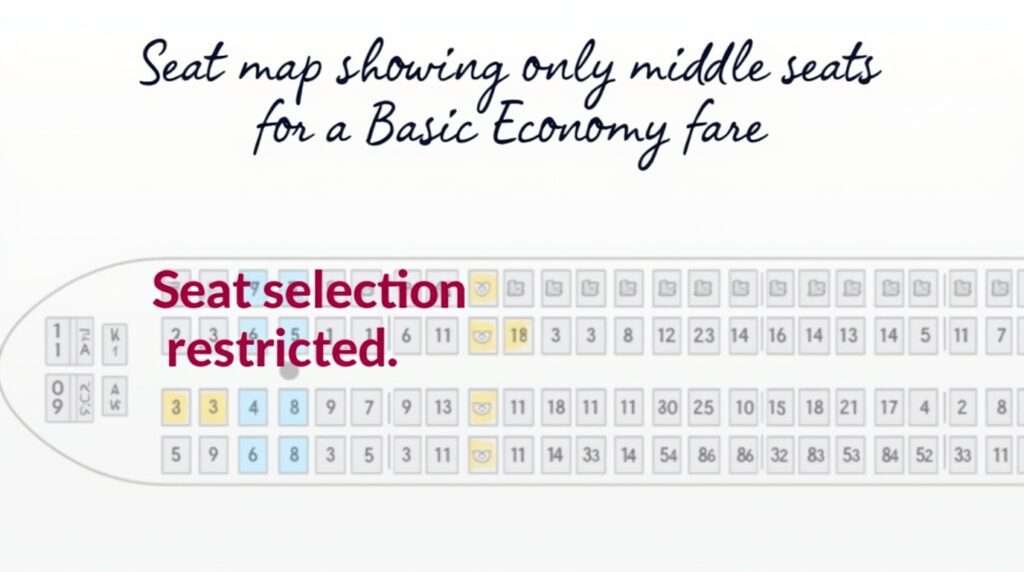
The problem: Many Basic Economy fares don’t allow seat selection at booking, or charge extra. Families can get split across the cabin, and the “free seat at check-in” may be a middle in the last row.
The fix: Decide up front how much seating certainty is worth to you.
If sitting together is non-negotiable, buy the higher fare or pay for seats when offered.
Traveling with kids? Call agents after purchase—they sometimes help, but paying or upgrading is the only guarantee.
If you’re solo and flexible, set a reminder to check in exactly when it opens; you might snag a better leftover seat.
- “don’t allow seat selection at booking” → FAA: Airline Seat Assignments & Passenger Rights
Basic Economy Booking Mistake #4: Forgetting about the 24-hour rule
The problem: You second-guess your Basic Economy purchase the next morning, but assume you’re stuck.
The fix: In many markets, there’s a 24-hour free cancel or hold option when booking directly with the airline. Use it:
Found a better schedule or a Main Economy fare on sale? Cancel within 24 hours and rebook.
Not sure yet? Choose the airline’s 24-hour hold if available, then decide.
“24-hour free cancel or hold option” → U.S. Department of Transportation: 24-Hour Ticket Rule
Mistake #5: Booking through an OTA that hides fare restrictions
The problem: Third-party sites often surface the cheapest fare without making restrictions obvious.
The fix:
Use filters that explicitly label Basic Economy.
Expand fare details before you click “buy.”
When in doubt, book direct on the airline’s site for clarity and easier post-booking changes.
- “book direct on the airline’s site” → NerdWallet: Best Travel Booking Sites
Basic Economy Booking Mistake #6: Expecting elite perks to work the same
The problem: Basic Economy can limit elite benefits: reduced or no complimentary upgrades, later boarding, restricted same-day changes, or changes in mileage accrual.
The fix: Check which perks still apply. If key benefits are suppressed, calculate the trade-off. Sometimes the premium for Main Economy is worth it. Forbes explains airline loyalty perks in detail.
“elite perks” → Forbes: How Airline Loyalty Programs Work
Mistake #7: Counting on a full-size carry-on with late boarding
The problem: Basic Economy often boards last. Even on airlines that allow a carry-on, overhead bins may be full, leading to a forced gate-check (and sometimes a fee on certain carriers or routes).
The fix: If keeping your bag with you matters, either:
Book Main Economy (often comes with earlier boarding), or
Pack under-seat only, or
Add Add priority boarding if available.
Consider the cost of arriving at baggage claim versus walking straight off the plane.
Basic Economy Booking Mistake #8: Ignoring change/cancel rules
The problem: Plans change. Many Basic Economy fares are non-changeable and non-refundable after the initial grace period. Even where changes are allowed, you might pay both a fare difference and a change fee.
The fix: Ask yourself: “If my trip shifts by a day, what happens?”
If there’s any chance you’ll need flexibility, buy Main Economy or a fare that allows changes.
For work travel or tight connections, consider refundable or flexible options. The peace of mind often outweighs the fare difference.
Mistake #9: Letting “fare math” ignore time and comfort
The problem: You save $40 but end up on a late-night connection with a tight layover, a middle seat, and a checked bag wait turning a 3-hour trip into 8 hours.
The fix: Put a price on your time. Add the hidden costs:
Extra airport time (late boarding + bag claim)
Middle seat comfort penalty (be honest!)
Connection risk (especially in winter or with short layovers)
If a better-timed nonstop in Main Economy costs $50 more, your future self will thank you.
International Light/Saver fares: Check if a checked bag is included.
Mistake #10: Booking Basic on complex itineraries
The problem: Multi-city, long-haul, or mixed-carrier itineraries amplify Basic’s pain points. You might face inconsistent bag rules, limited through check privileges, or tight interline constraints.
The fix: Keep Basic for simple, nonstop trips where you can travel light. For complex routes:
Use a single carrier or alliance when possible.
Step up to Main Economy to simplify baggage and seating.
Avoid “self-connect” itineraries (separate tickets) unless you build generous layovers and understand bag re-check requirements.
- Complex itineraries: Keep Basic for simple nonstop trips. For multi-city or mixed carriers, Essential Travel Planning Strategies help.
Mistake #11: Overlooking international “Light/Saver” fares
The problem: Many international airlines sell “Light,” “Economy Basic,” or “Saver” fares that behave like Basic Economy but look like regular economy. The gotcha is usually no checked bag, and seat selection costs extra even on long-haul flights.
The fix: On international trips:
Check whether a checked bag is included (often not).
Compare the next fare up; it may include a bag and seat selection for a small premium.
If you need to bring gifts or bulky items home, plan for return-leg bag fees too.
- “Light/Saver fares” → IATA: Fare Types and Rules
Mistake #12: Assuming upgrades are impossible (or guaranteed)
The problem: Basic Economy usually blocks complimentary upgrades and can limit mileage upgrade instruments. But paid upgrade offers sometimes appear after booking or at check-in.
The fix: Manage expectations:
Don’t count on an upgrade; book the cabin you’re happy to fly.
Keep an eye out for post-purchase upgrade offers in your account or app.
If extra legroom matters, price Main Cabin Extra/Comfort seats versus a full cabin upgrade you may get 80% of the comfort for a fraction of the cost.
- Upgrades & co-branded card perks: Verify airline card benefits.
Mistake #13: Forgetting co-branded credit card perks (or assuming they still apply)
The problem: Airline cards can include a free checked bag, early boarding, or priority customer service but some perks don’t stack with Basic Economy the way you expect, and partner/foreign-flag segments may be excluded.
The fix: Before you book:
Verify how your card’s perks apply to Basic Economy on your route.
Make sure the cardholder is the primary traveler on the reservation and the card is used for purchase if required.
If the perks fully offset what you’d otherwise buy (bag + boarding), Basic may be a sweet spot.
- Setting fare alerts: Track price drops with alerts from trusted sources.
- “airline card benefits” → NerdWallet: Best Airline Credit Cards
Mistake #14: Forgetting to set price alerts (and using them lazily)
The problem: You pick a Basic fare now because it’s cheapest today, but a Main Economy fare drops tomorrow.
The fix: Set fare alerts for your route and dates before you buy. If you see a price drop on the more flexible fare:
Book it and use the 24-hour cancellation to dump the Basic ticket (where applicable), or
If your airline issues travel credits for price drops on the same fare, rebook accordingly.
Mistake #15: Packing like you didn’t buy Basic Economy
The problem: Showing up with a borderline bag, extra personal items, or souvenirs you can’t fit and paying at the gate.
The fix: Pack to your fare, not your fantasy:
Choose a true under-seat bag (soft-sided fits better).
Consolidate: one personal item means one stash the snack bag or purse inside.
Wear bulk (coat, hoodie) and use pockets for light items like cables or a book.
Leave expandable handles unzipped at home; they tempt you to overpack.
- Packing for Basic Economy: One Bag Packing List ensures under-seat compliance.
A simple decision framework (60 seconds, tops)
Ask yourself these four questions:
Will I check a bag or need a wheeled carry-on?
If yes, Basic usually loses. Jump to Main Economy and compare total cost.Do I need a specific seat or to sit with someone?
If yes, either pay for seats (and add to the true cost) or buy Main Economy.Might my plans change?
If yes, Basic’s rigidity is risky. Pay for flexibility you’ll actually use.Am I comfortable boarding last with only an under-seat item?
If yes, Basic might be perfect especially on short, nonstop trips.
If you said “yes” to two or more of the first three, Basic probably isn’t your friend for this itinerary.
“travel safety & luggage tips” → Travel.State.Gov: Baggage and Security Tips
Pro moves to make Basic Economy work for you
Check in the minute it opens. Better odds of decent leftover seats and overhead space (on airlines that allow carry-ons).
Watch for paid seat sales post-purchase. Airlines sometimes discount standard seats in the days before departure.
Leverage status where it still applies. Even if upgrades are blocked, some carriers still honor earlier boarding or same-day standby for elites, know your rules.
Use the airline app. Gate change alerts, upgrade offers, and seat map snapshots show up there first.
Know your personal item. Pick a bag that’s guaranteed to fit under the seat on narrow-body aircraft; test it at home.
Basic Economy Booking Mistakes: FAQs
What is Basic Economy, exactly?
A no-frills economy fare designed to show the lowest price. It typically restricts seat selection, changes, boarding order, and sometimes carry-on baggage. You still get a standard economy seat and the same safety and arrival time as everyone else.
Is Basic Economy worth it?
For short trips with only a personal item and flexible seating, yes, especially if the price gap to Main Economy is large. For families, complex trips, or when you need flexibility, the upgrade is often the smarter value.
Can I bring a backpack?
Usually, yes, as your personal item if it fits under the seat. Full-size backpacks can be too big. Measure yours and compare to the airline’s posted dimensions.
Will I earn miles and status?
Often yes, but sometimes at reduced rates, and some elite benefits are limited on Basic. Check your airline’s accrual chart.
Can I sit with my kids?
Not guaranteed on Basic. Book Main Economy or pay for seats when offered. If you must book Basic, call the airline after purchase and ask for assistance, but be prepared to upgrade if necessary.
What if I decide I don’t want Basic after I buy?
If you booked directly and you’re within the 24-hour window (where available), cancel and rebook. After that, Basic fares are usually non-changeable/non-refundable.
Basic Economy Booking Mistakes: The bottom line
Basic Economy isn’t “bad”, it’s specific. It’s built for travelers who can fly light, don’t need seat certainty, and won’t change plans. If that’s you, it can be a smart way to keep costs down. If it’s not, the small premium for Main Economy often buys real value: bags, seats, flexibility, and a smoother day of travel.
Before you click “cheapest,” do the total cost math, read the fare rules, and be honest about what you need from this trip. That’s how you turn an ultra-low fare into a truly low-stress flight.






 English