

Sustainable Travel 2026: The Complete Guide (Trends, Destinations, Green Tech & Zero-Waste Tips)
Sustainable travel in 2026 has evolved from a niche preference to the new global standard. This year, travel isn’t just about seeing the world, it’s about healing it. From regenerative tourism that actively repairs ecosystems to community-owned lodges that keep profits local, the future of exploration is cleaner, fairer, and more meaningful than ever before.
In this comprehensive 2026 guide, we’ll explore the key trends redefining responsible travel, highlight destinations leading the charge, examine groundbreaking green technology, and provide actionable zero-waste tips you can use today. Whether you’re planning a tropical retreat or a cross-continent adventure, this guide will help you travel with purpose, leaving a positive footprint everywhere you go.
Looking for less crowded alternatives? Explore our guide to Underrated Destinations to Visit in 2026 to Avoid Overtourism.
Table of Contents
ToggleKey Trends in Sustainable Travel 2026
1. From “Nice-to-Have” to “Prove-It”
Travelers in 2026 are savvy, they’ve grown tired of greenwashing and vague sustainability claims. The new demand is for transparency, verification, and measurable impact. According to Booking.com’s 2025 Sustainable Travel Report, 78% of travelers want clearer sustainability information before booking. Expect to see more hotels and tour operators sharing real-time carbon data, third-party certifications, and clear breakdowns of where your money goes.
2. Regenerative Tourism Takes Center Stage
Moving beyond “do no harm,” regenerative travel focuses on leaving places better than you found them. This means supporting initiatives that replant forests, restore coral reefs, and rebuild soil health. As Vogue recently highlighted, regenerative experiences are becoming the new luxury travel standard. In 2026, destinations from the Azores to the Maldives are offering travelers hands-on opportunities to participate in conservation turning a vacation into a legacy project.
3. Community-Owned Stays Become Mainstream
Why stay at a global chain when you can sleep where your money supports local families? Community-owned lodges, homestays, and cooperatives are rising in popularity, ensuring tourism revenue stays within the destination. These stays often provide deeper cultural immersion, authentic experiences, and stronger environmental stewardship because those who depend on the land are the ones protecting it. Discover remarkable options in our guide to Sustainable Travel Eco-Lodges.
4. Low-Carbon Transport Goes Luxury
Forget cramped buses and slow trains. 2026’s low-carbon travel is comfortable, scenic, and smart. Europe’s expanding night-train network, Japan’s renewable-powered Shinkansen, and electric ferries in Scandinavia are redefining overland and overseas travel. The World Travel & Tourism Council reports that 67% of travelers now consider carbon footprint when choosing transportation. With amenities like sleeper cabins, onboard dining, and reliable Wi-Fi, choosing rail or sea is becoming a premium experience, not a compromise.
5. AI and Tech Make Green Choices Effortless
Artificial intelligence is quietly revolutionizing travel sustainability. From contrail-reduction flight paths and predictive maintenance that cuts aircraft emissions to smart hotel systems that optimize energy and reduce food waste, technology is making sustainable travel the default, not the exception. As Reuters reports, major airlines are implementing AI to reduce fuel consumption by up to 5% per flight.
6. Slow, Meaningful Travel Replaces “Checklist Tourism”
The race to visit Instagram-famous hotspots is slowing down. In its place: off-the-beaten-path journeys, cultural apprenticeships, and immersive experiences. According to Euronews Travel Trends, searches for “slow travel” have increased by 140% year-over-year. Travelers are seeking depth over distance, choosing fewer destinations, staying longer, and engaging in hands-on learning. Learn more about What Travelers Can Do About Overtourism in 2026.
🌍 Top Sustainable Destinations for 2026
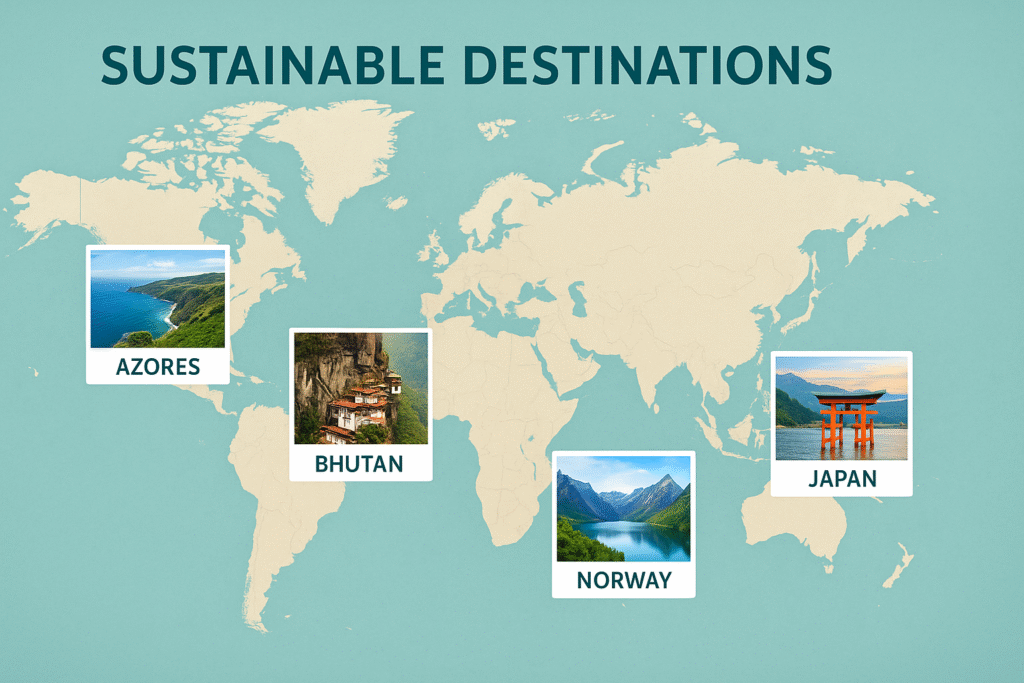
Azores, Portugal
A leader in renewable energy and community-based ecotourism, the Azores offer volcanic landscapes, whale watching, and lodges that fund rewilding projects. The archipelago’s Life IP Azores Natura Project allows travelers to join native tree planting or coastal cleanup programs as part of their stay.
Bhutan
Still championing “High Value, Low Impact” tourism, Bhutan continues to prioritize visitor well-being and environmental preservation. All visitors contribute to the country’s sustainability fund, which supports free healthcare, education, and conservation.
Costa Rica
A long-time pioneer, Costa Rica now focuses on regenerative hospitality—lodges that are carbon-positive, reforest degraded land, and reinvest in local schools. Over 98% of its energy comes from renewable sources.
Norway
From electric ferries in the fjords to fully electric scenic train routes like the Flåm Railway, Norway is a testbed for clean transport. Its “Sustainable Destination” certification ensures regions manage tourism growth responsibly.
Japan (Yakushima & Nagano)
Beyond Tokyo, rural Japan is embracing satoyama revitalization, inviting travelers to help restore traditional forest-farm landscapes, stay in farmhouses, and support aging rural communities through the Satoyama Initiative.
For seasonal inspiration, check out our Eco-Friendly Fall Getaways guide.
🛠️ 6 Green Innovations Changing Travel in 2026
AI-Powered Route Optimization – Real-time emissions tracking suggests the greenest flight, train, or ferry options.
Blockchain for Transparency – Verify carbon offsets and sustainable certifications with tamper-proof digital records.
Green Hydrogen Transport – Ferries and buses piloting zero-emission hydrogen fuel cells.
Sustainable Aviation Fuel (SAF) Scaling – Major airlines are increasing SAF blends on long-haul routes.
Circular Hotel Design – New builds use modular, recycled materials and aim for zero construction waste.
Biometric & Digital Borders – Reducing paper,排队, and processing energy at airports worldwide.
For more on emerging travel technology, see our guide to sustainable tourism innovations.
♻️ Zero-Waste Travel Toolkit: Pack Light, Waste Less

Reduce your footprint with these essentials:
Reusable Everything: Water bottle, coffee cup, utensils, and tote bag
Solid Toiletries: Shampoo bars, soap leaves, toothpaste tablets, no plastic, no liquids
Laundry Sheets: Compact, dissolvable, and plastic-free
Digital Tools: E-tickets, offline maps, and refill-station apps
Mindset: Choose bulk, refuse single-use plastics, support local markets
Planning a seasonal trip? Get inspiration from our Eco-Friendly Fall Getaways guide for cozy, sustainable retreats.
❓ FAQ: Sustainable Travel in 2026

What’s the difference between sustainable and regenerative travel?
Sustainable aims to minimize harm; regenerative aims to create net-positive impact, actively healing ecosystems and strengthening communities.
Where can I find verified eco-friendly accommodations?
Look for recognized certifications and check our curated list of remarkable eco-lodges.
How do I know if a hotel is truly eco-friendly?
Look for recognized certifications like EarthCheck, Green Globe, or LEED. Genuine operators share data on energy use, waste diversion, and community partnerships.
Is sustainable travel more expensive?
Not necessarily. Rail passes can be cheaper than flights, reusable gear saves money long-term, and community homestays often include meals and experiences at lower costs.
What’s the best low-carbon way to travel regionally?
Trains first, then electric coaches or ferries. For example, night trains in Europe or Japan’s rail network offer comfort, scenery, and up to 80% lower emissions than flying.
How can I travel with less waste?
Pack reusables, refuse disposable items, choose digital over paper, and support businesses with refill and compost systems.
How do I avoid contributing to overtourism?
Choose underrated destinations, travel during off-peak seasons, and support community-owned businesses. Read our full guide on overtourism solutions for 2026.

✨ The 2026 Traveler's Takeaway
This year, every trip is an opportunity to restore a reef, empower a community, preserve a culture, or simply tread more lightly. Sustainable travel in 2026 isn’t about perfection; it’s about progress, intention, and connection.
Ready to plan your next conscious journey? Start by:
Exploring underrated destinations to avoid crowds
Choosing from our recommended eco-lodges
Implementing overtourism solutions in your travels
Considering seasonal eco-getaways for lower-impact trips
Written with the forward-thinking traveler in mind for those who believe the best way to explore the world is to help protect it.
Updated for 2026 trends, data, and destinations.
Continue Exploring Sustainable Travel:
Destinations: Underrated spots for 2026
Accommodations: Verified eco-lodges worldwide
Solutions: Fight overtourism in 2026
Seasonal: Eco-friendly fall escapes
Sources & Further Reading:
UNWTO Asia-Pacific – Tourism Trends 2026
World Travel & Tourism Council – Climate Action Data
Euronews Travel Trends – Slow Travel Movement
This guide is regularly updated with the latest 2026 sustainable travel information. Last updated: March 2026.






 English